Talent LNG: Tri-lingual export platform for cryogenic piping
Client: Talent LNG Year: 2024 Services: Web Design & Development, Tri-lingual Content Architecture, Catalog System Duration: Roughly 10-12 weeks Tech: WordPress, Elementor, WPML
The problem
Talent LNG makes vacuum-insulated double-wall piping systems for cryogenic fluid transport (LNG, liquid hydrogen, liquid nitrogen). Their buyers are EPC contractors, shipyards, and gas-utility engineers in Korea, Japan, Europe, and the Middle East. Technical reviewers at those buyers read in Korean, Japanese, or English depending on which desk the spec sheet lands on.
A typical sales cycle for a cryogenic piping system runs six to eighteen months and moves through multiple technical-review stages. Every stage needs the same data in the right language: dimensions, thermal performance, class-society approvals, weld-procedure specifications, patent documentation. The buyer usually wants a downloadable PDF catalog alongside the site.
The existing site had pieces of this (certifications were listed, a catalog existed) but the content was scattered, the language switcher broke in places, and the 2024 version of the catalog had not been wired into the site at all. The ask: rebuild as a proper tri-lingual export platform.
What we built
A tri-lingual (EN, KO, JA) export site structured around the buyer's technical-review workflow.
- Six business-unit pages: Double Wall Piping, Fan System, Tubing Package, Vacuum System, GRU/GVU, Hydrogen Application
- Full 2025 PDF catalog wired into the site as a first-class download (the Korean, English, and Japanese versions all served from the same catalog module)
- Certification wall: ISO 14001, ISO 45001, DNV, ABS, Lloyd's Register, Korean Register, Bureau Veritas, China Classification Society. Each with the corresponding certificate image
- Patent gallery. Four vacuum-insulated piping patents across Korea, Japan, and China jurisdictions, with the actual patent document imagery
- ESG / quality pages separate from the product pages (the compliance reviewer and the engineering reviewer take different paths through the site)
- Inquiry form routed to the right sales engineer based on which business unit the visitor came from
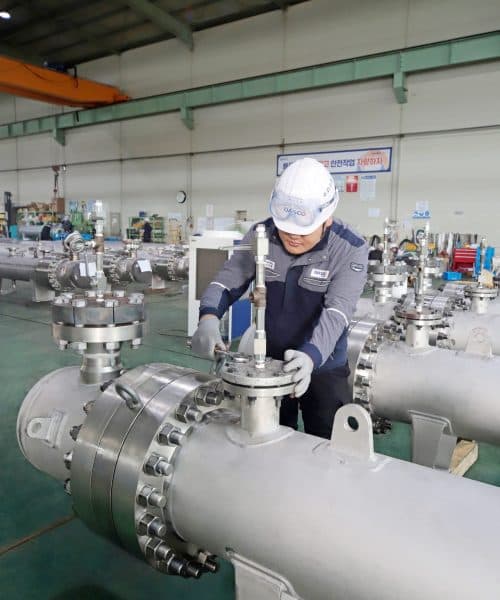
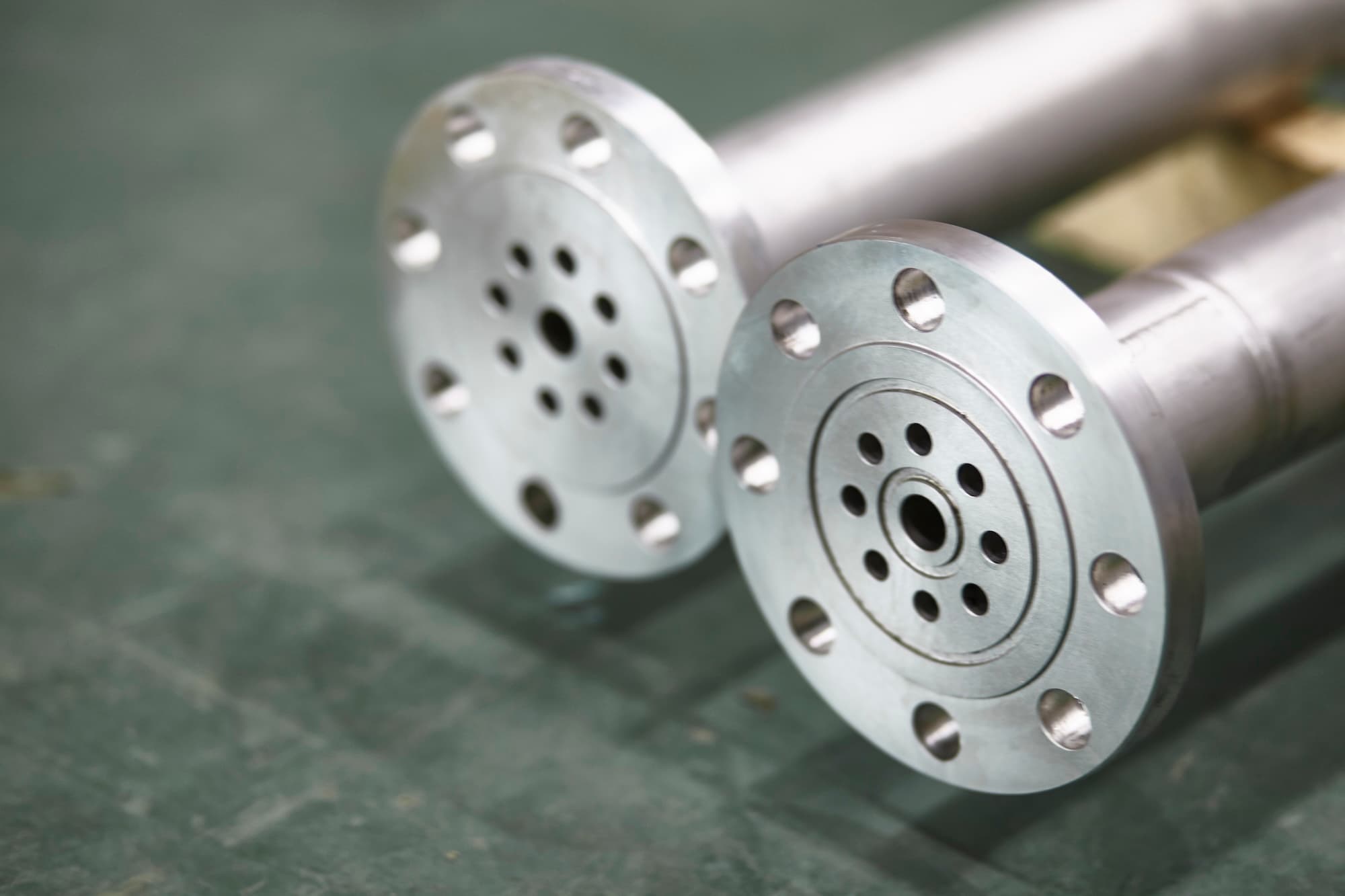
- Industrial photography throughout. Real plants, real piping, no stock
How we built it
Weeks 1-3. Content audit across all three languages. Talent LNG had English copy in one state, Korean in a different state, and Japanese drafted but never published. We built a master content sheet and brought all three into parity before touching the site.
Weeks 4-5. Information architecture. Six business units + patents + certifications + media + quality. We designed the nav so a Japanese gas-utility engineer, an English-speaking EPC contractor, and a Korean shipyard procurement lead each land on their natural first page without re-reading a second time.
Weeks 6-8. Elementor build. Hero photography (cryogenic piping systems in situ), patent document imagery cleaned and laid out, certification wall assembled.
Weeks 9-10. WPML tri-lingual setup. Korean and English rolled out first; Japanese followed once the Japanese reviewer had signed off on the technical terminology. Japanese engineering vocabulary for cryogenic systems has its own conventions and the machine-translation version was not close enough to ship.
Weeks 11-12. Catalog integration, inquiry routing, QA, launch.
What it changed
The three language versions finally match each other. Before, the English site was more complete than the Japanese one and the Korean one was slightly different again. After, a Japanese reviewer and an English reviewer read the same product specs in the same order. That simple alignment removed an entire class of "your site says X but the spec sheet says Y" conversations that used to eat sales cycles.
What we learned
Tri-lingual is not bilingual plus one. Adding Japanese to an EN/KO site is a separate project, not an increment. Technical terminology in Japanese engineering has conventions that do not mirror Korean, and machine-translated output reads as machine-translated to any native reviewer. Budget Japanese as a full pass, not a final step.
Patent documentation is marketing content in this vertical. EPC contractors and class-society reviewers look at patent imagery to validate that a manufacturer has real IP rather than a derivative build. We gave the patents their own gallery page and the engagement time on that page was higher than on several of the product pages.
PDF catalogs still matter. The instinct was to push buyers toward the web product pages instead of a PDF download. The buyers did not cooperate. They wanted the PDF, they printed the PDF, they attached the PDF to emails. The site became a discovery layer; the catalog stayed the closing document. We stopped fighting that and wired the 2025 catalog into the hero nav as a first-class element.
Stack
- WordPress
- Elementor
- WPML for EN/KO/JA delivery
- Custom catalog download module (tri-lingual file serving)
- Certification gallery with native-language switching
- CloudFront CDN for international distribution
Want something similar?
Tri-lingual or four-lingual export sites for specialty industrial brands. Cryogenic piping, heat exchangers, precision components, anything that needs to read credibly in three or more languages to three different technical-review audiences. Email hello@cclemang.com or check our web design and development service page.