Services / Interactive 3D applications
Interactive 3D applications
Interactive 3D applications
Product showcases, training simulations, assembly guides, process visualizations.
16
Interactive 3D apps shipped
6
Project patterns we deliver
$5K
Entry price
Web 3D Product Showcase, 1 week
8–10 wk
Largest typical scope
Safety / disaster training simulation
Opening
A well-built 3D app can compress a 40-page PDF, a 6-week sales cycle, a 3-day training curriculum, or a blurry walkthrough video into a single browser moment. It runs on any laptop. It works in any language. It doesn't require a download, a plugin, or a VR headset.
We've built sixteen of them. Excavator attachments. Hydrogen compressors. Wastewater plants. Battery recycling systems. Dental implants. Sneakers. Safety training scenarios. CNC machines. Facial rollers. The thread isn't the industry. It's the fact that each product or process was better explained in three dimensions than in two.
If your product or process is one of those, we should talk.
What we actually ship
Six patterns, each one a real project we've delivered. Each pattern has a typical price and timeline. Every engagement is fixed-scope.
Product showcases
Single-product or product-line 3D presentation. Camera orbit, hotspots, variant selection, narrated walkthrough. Built for sales, trade shows, marketing sites, and investor decks.
Typical: 1–2 weeks · $3K–$10K Shipped for: Daedong MAXBRIO pile-driver attachments, KOAI oil-leak-collecting drone (CES 2023), KBIC facial skin roller, GTC hydrogen gas compressor.
Assembly and installation tools
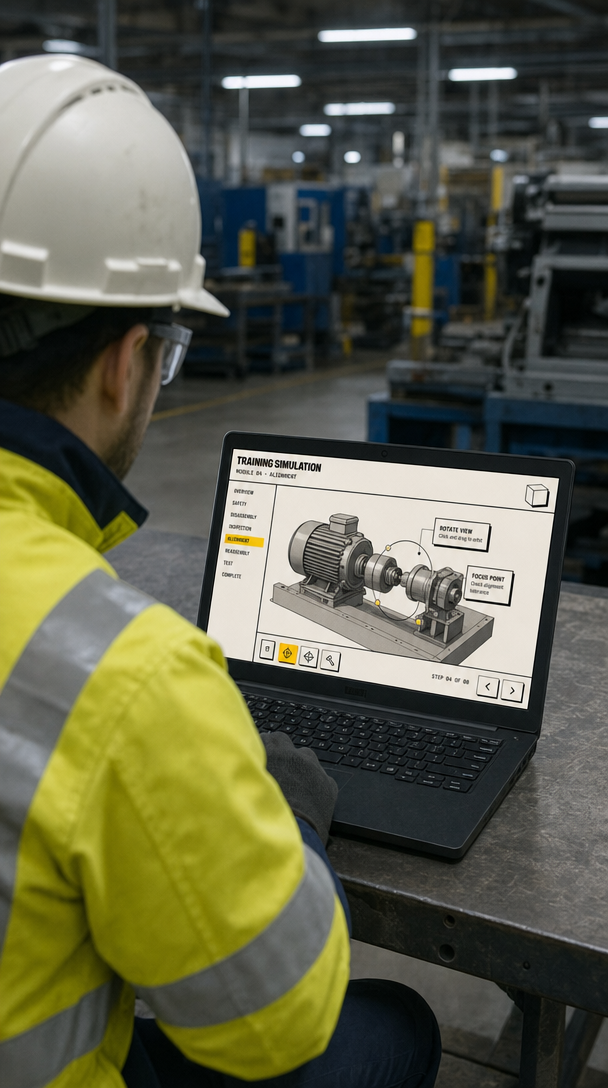
Step-by-step 3D guides for installation, assembly, or reconfiguration. Multilingual by default. Works on field tablets and office laptops. Often replaces printed manuals entirely.
Typical: 3–6 weeks · $4K–$15K Shipped for: Moojin earthquake-resistant ceiling systems (EN/KO), SW-Valve industrial valve assembly.
Operator training simulations
3D machine training with scripted walkthroughs, subsystem exploration, and reconfiguration scenarios. Used for onboarding field operators and sales engineers.
Typical: 4–8 weeks · $7K–$40K Shipped for: ORS Korea CNC machine interactive presentation.
Process and system visualizations
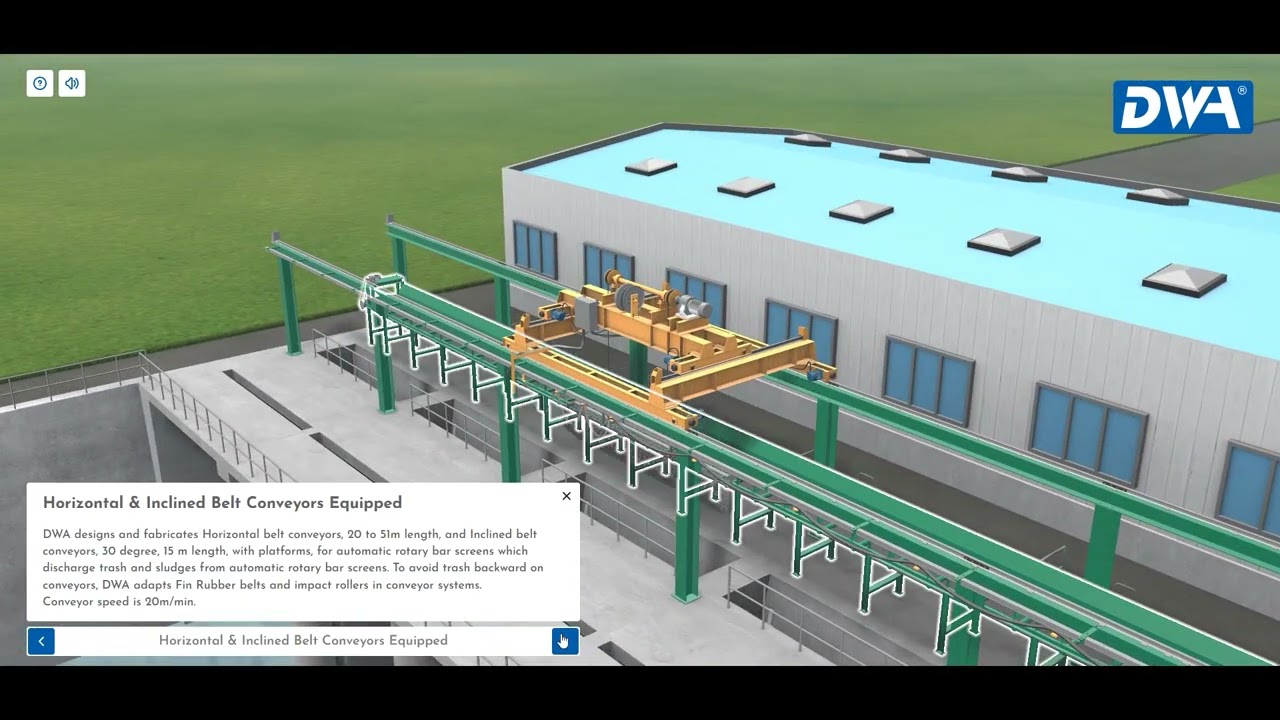
Multi-scene walkthroughs of full industrial plants or processes, with selectable equipment, spec overlays, and safety/operation annotation.
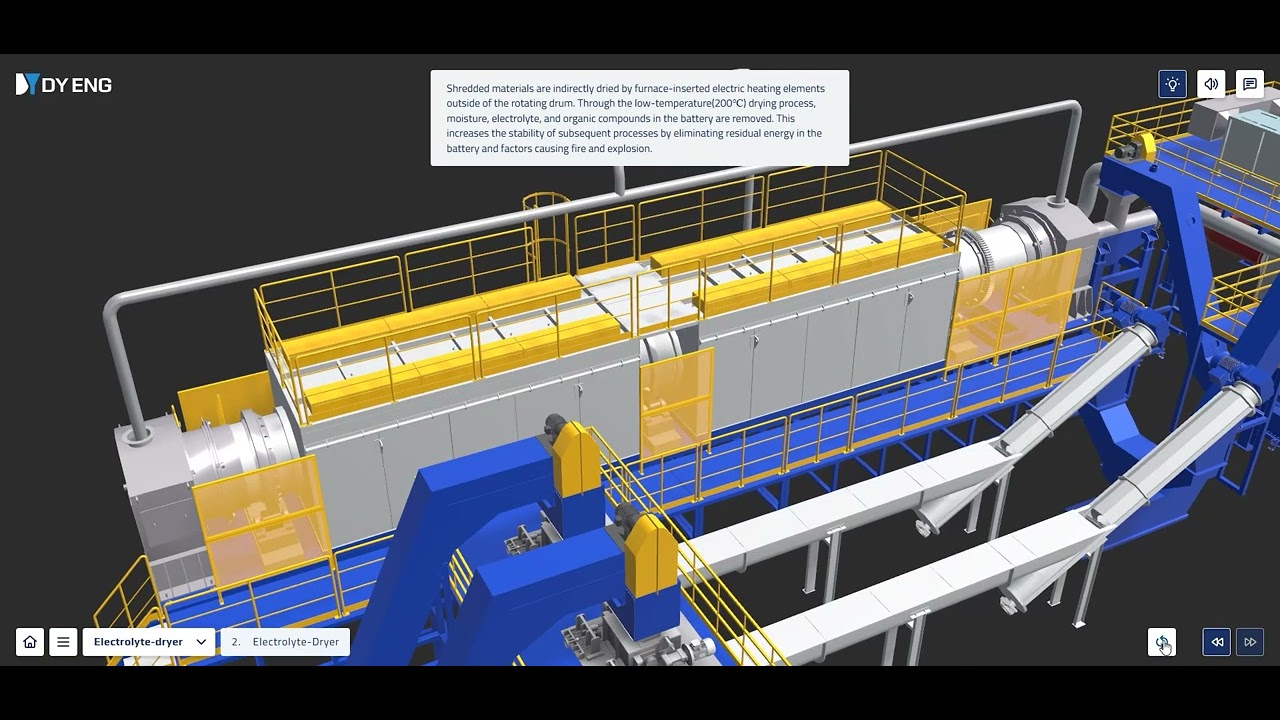
Typical: 4–8 weeks · $7K–$40K Shipped for: Dowon APEX wastewater treatment plant, DY Engineering battery recycling system.
Safety and disaster training simulations
Scenario-driven training (fire, chemical spill, equipment failure) with first-person navigation, particle effects, and branching outcomes.
Typical: 6–10 weeks · $7K–$50K Shipped for: Paran industrial safety software.
Medical and patient education
Clinical 3D explainers for patient consent, treatment planning, and medical-device marketing. HIPAA-adjacent compliance handled on request.
Typical: 2–4 weeks · $6K–$20K Shipped for: Zion Dental Implants patient communication.
Six 3D project patterns we deliver
| Pattern | Typical scope | Typical price | Representative shipped work |
|---|---|---|---|
| Product showcases | 1–2 weeks | $3K–$10K | Daedong, KOAI, KBIC, GTC |
| Assembly and installation tools | 3–6 weeks | $4K–$15K | Moojin, SW-Valve |
| Operator training simulations | 4–8 weeks | $7K–$40K | ORS Korea CNC |
| Process / system visualizations | 4–8 weeks | $7K–$40K | Dowon APEX, DY Engineering |
| Safety and disaster training | 6–10 weeks | $7K–$50K | Paran |
| Medical and patient education | 2–4 weeks | $6K–$20K | Zion Dental |
Tech stack
- WebGL/WebGPU runtime. Three.js / React Three Fiber for most projects; Verge3D for industrial-training scenarios; Babylon.js for simulation-heavy work with particle and scenario state.
- 3D content pipeline. Blender for custom modeling, Substance for materials, GLTF/GLB for delivery, Draco compression for load-weight management. AI-assisted generation (Tripo, Hunyuan3D) for baseline geometry where client-owned CAD isn't available.
- UI layer. HTML/CSS overlays, Next.js or vanilla-JS depending on scope, i18n framework for multilingual delivery.
- Performance budget. We target 60 fps on a mid-range laptop (Intel iris / AMD integrated) and graceful degradation to 30 fps on tablet. Load weight under 4 MB for simple showcases, under 12 MB for full-plant visualizations.
- Hosting. Vercel, Netlify, or client cloud. We don't lock you into a platform.
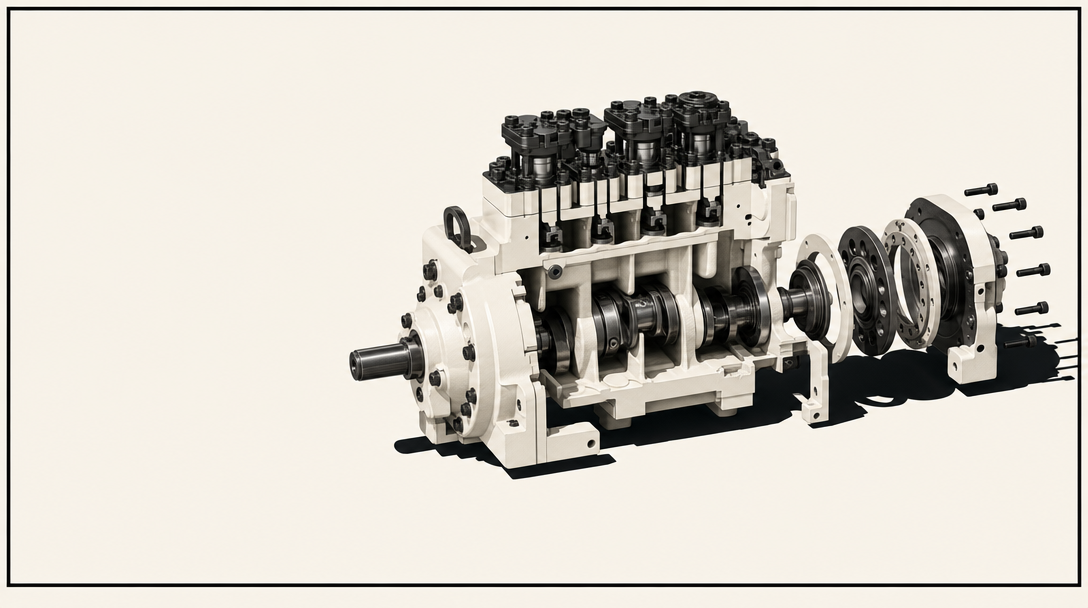
What makes our 3D different from a platform (Threekit, Emersya, 3D Cloud)
Platforms are good when the buyer already owns a large product catalogue, has an internal 3D team, and wants a configurator as a feature of their commerce stack.
We're different in three ways:
- We build custom. The app is yours. No platform fees, no per-seat pricing, no being locked out if you stop paying. Code in your repo.
- We handle the 3D work. You send us drawings or CAD. We build the scene, the UX, the integrations. You don't need an in-house 3D team.
- We ship one project at a time. A platform is a platform. It pays off when you have dozens of products to configure. Our work is sized for brands with a handful of flagship products and the need to present each one well.
If you have 400 SKUs and a PIM, Threekit is probably the right call. If you have four flagship products and a need to make them sing, we probably are.
CCLEMANG vs configurator SaaS platforms
| Criterion | Platform (Threekit / Emersya / 3D Cloud) | CCLEMANG custom buildOur default |
|---|---|---|
| Pricing model | Annual subscription + per-seat fees + integration overhead | One-time fixed-price build; code in your repo |
| Lock-in | Locked into platform renderer + CMS | No platform lock-in; you own the source |
| Who owns the 3D pipeline | You + their services team | We own the entire 3D pipeline, end to end |
| Catalog scale fit | 400+ SKUs, PIM-grade | 5 to 500 SKUs, brand-led catalogues |
| Setup time to first live experience | 8–12 weeks plus integration | 1–6 weeks for productized scope |
| Editorial / brand-first surface | close | check |
What makes our 3D different from a tier-1 craft studio (Lusion, Active Theory, Resn)
Tier-1 studios are where campaign spectacle lives. The kind of work you see on Awwwards Site of the Year. They're good at shader craft, motion direction, multi-user digital spaces, and experimental WebGL.
We're not competing with them on craft spectacle. We're doing two things they typically aren't:
- Industrial-training and B2B explainer work. Tier-1 studios don't usually take on a hydrogen compressor or a CNC machine. We live there.
- Accessible economics. Tier-1 projects typically start at $100K. Ours start at $5K. Different market, different deliverable shape.
If your budget is $100K+ and you want Google Doodle-tier craft, call Active Theory. If your budget is $5K and you want Moojin-tier clarity, call us.
Before you start a project: a checklist
A 3D project usually goes well when the client has:
- A named product or process. Not "we want 3D" but "we need to explain our sludge remover."
- Reference material. Drawings, photos, CAD, or a reachable engineering contact for technical questions.
- A launch context. A trade show, a product launch, a funding round, a training rollout. A date on the calendar makes scope decisions faster.
- A budget range. Even "between $5K and $20K" is enough; we tailor scope to the range.
- One decision-maker. One person who signs off on scope and build. Nothing slows a 3D project like a rotating committee.
If you have those, send a two-sentence email to info@cclemang.com and we'll respond inside 24 hours.
Cases
See all cases →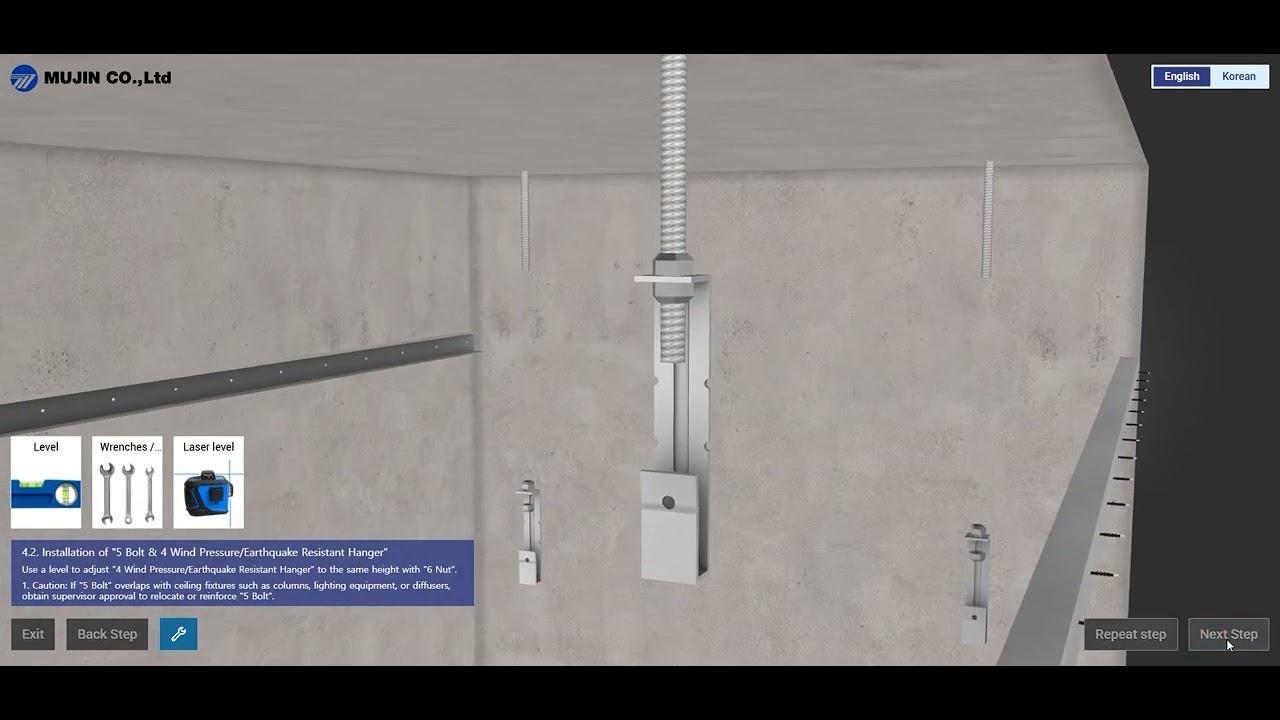
Ready to scope interactive 3d applications?
Tell us what you're building. We reply inside 24 hours.